Showing posts with label technology. Show all posts

Thursday, June 20, 2013

I've Got An Eight-Track Mind

Smells trigger memory.  So does the weather.  In my case, as I've discussed in a previous post, dull, repetitive menial tasks do it, too.  I'd call the phenomenon "Proustian," but that would be pretentious and would suggest that I have managed to get through Remembrances of Times Past, something I have not been able to do up to this point in my life. 

One of the greatest memory triggers for me, and for many, I've heard, is music.  Anything by Paul McCartney and Wings, for example, takes me right back to Rocky Ledge, the swim club where we spent our summer days when I was a pre-teen, and where I fell in love on a daily basis, with girls in bikinis who never even knew I was there. 

I've taken to using the Shazam app when I am driving to and from work, in order to capture songs I either like or connect with, for whatever reason.  Okay, it's also to show off, since I know the songs I tag will automatically post on my Facebook page.  I like to imagine people seeing what I'm listening to and thinking, "Wow, that Dan sure does have an eclectic music sense!" 

The other day Dionne Warwick's rendition of Burt Bacharach and Hal Davis's "Walk on By" came on KUTX -- our public radio station here in Austin.  It hit me like the proverbial bullet in the brain, and I was in our living room on Hartford Lane, dozing in my father's lap, staring out the pre-dawn bay window, hearing the "Ca-CHUNK-click" of the eight-track stereo cassette player, switching tracks. 


I'm sure my dad had lots of 8 track tapes, but the three I remember best are Dionne Warwick, A Partridge Family Christmas, and Simon and Garfunkel.  The latter is the only one of these three that I currently own on MP3.  Everyone I know who remembers 8 track, does so fondly, with a glint in their eye.  It's so archaic now, of course, along the same lines as the CB radio.  But for me, it's a joyful, warm memory, and I may very well have to get myself some Dionne Warwick/Burt Bacharach for my iPod some time soon.


Tuesday, June 18, 2013

A Great Day for Frogs

Our backyard play scape in the morning rain
"Look at that rain!" I say, noticing it after helping the boys get dressed for their second day of Raider Baseball Camp.  "Oh well, it's a great day for frogs."

It's one of those things I say a lot.  One of those Dad Things.  I'm not sure where I got the phrase; must've heard it somewhere.  It's one of those things the boys roll their eyes at -- like when we're at our favorite Chinese restaurant, Happy Dragon in Round Rock, and I draw their attention to the string-heavy traditional music playing on a loop and say, "Hey, do you guys like this song?  I wrote this."  They pretend to be pained by my corny jokes, but their vague smiles suggest they will one day be nostalgic about it, just as I am with my own brother about the many, many phrases, quips and bad jokes our father repeated through the years.

Any way you classify this weather, it signifies a rain out -- a re-thinking of plans.  A re-boot of our day.  Jeanette has already left for work, and it is a Guys' Day.  The boys immediately go for their Nooks, and begin constructing houses that will keep them safe from the zombies who creep around the perimeters of their virtual homesteads.

Jackson and Diego playing Minecraft on a rainy morning in June
I grab my tablet and get back into the novel I'm currently reading, until I feel a pleasant sleepiness come over me.  I put the device face down on my chest, the way I used to leave an open book there when I'd get drowsy.  Then I nap, until one of the boys comes in to show me the houseboat they've been working on, and ask me about going to the movies.

I get on the computer and buy e-tickets for the 11 o'clock matinee of Man of Steel.

It's all great stuff.  I'm not a troglodyte who pines for the days before there was this level of technology. I will say, though, that I grew up in a place and time that found me often out in the rain.  My friends and I were explorers, and we were lucky to be surrounded by acres of relatively pristine land.  When I think back on childhood rainy days, I feel the cool droplets on my skin, and I smell the earth, replete with wildlife.  Earthworms were the most obvious, but we also saw salamanders, moles, chipmunks, and yes, frogs.  Lots of them.

Maybe that's where I got that from.  Hmm.  I am feeling somewhat inspired to take the boys out on a nature walk somewhere.  Perhaps I'll do that.  After the movie.  Go out on a trail, in search of some frogs.

Wednesday, June 12, 2013

The Reports of Reading's Death Have Been Highly Exaggerated

Years ago, as I was having lunch with one of those few elders who I consider my true "mentors," she made what I thought was an unexpected observation.  She was in New York only briefly, stopping to work with a set of schools in peril, before moving on to Philadelphia or Jerusalem, or wherever her next gig was.  

"I love riding the subway when I come to New York," she said, her eyes wide with wonder, "because it restores my faith in humanity!"

"Really?" I said, nearly choking on my salad.  "I can't say I've ever heard anyone say that before."

"Because there's so much reading going on!  Despite what all the spoiled-sports are saying about the so-called 'death' of reading."

Pleased with her observation, she chortled her rather awkward giggle and went about eating her meal.  

It was one of those observations that stuck with me.  On my way home to Brooklyn that afternoon, I did my usual people-watching, this time with the specific purpose of verifying, or debunking, my friend's thesis regarding reading.  There were the usual sleepers, bee-boppers and gamers.  But there were, indeed, a good number of people with their noses pressed into books, newspapers and Kindles.  They were reading a great variety of materials -- from the Bible to comic books --  and I have to admit that, like my mentor, I was heartened by the realization that reading was in fact alive and well and living underground in New York City.

That subway ride occurred back in the days when you knew a Kindle when you saw one, and you knew that a Kindle meant the person was reading something.  I'm sure that if I visited the F train today, I'd see fewer print and more devices.  The Kindles might be playing music or movies, and people might be reading books on their iPhones.  The data might be more difficult to gather now, but I'll bet you dollars to donuts, or iBooks to Tablets, that many of them are indeed reading something.

Now I am about 1,800 miles away from the nearest New York subway station, but if I want to be reminded of the fact that reading is alive and well, I need only open my gmail account and look at all the updates Goodreads automatically sends me, via Facebook.  Many of my Facebook friends are voracious readers (you know who you are) and this app makes me instantaneously aware that they have read, made progress in, or reviewed a new book.  

Now I know there's someone out there reading this blogpost (reading again) who knows a lot more about publishing than I do.  If you've got your eye on the balance sheet and are watching for industry numbers, then you could probably tell me that Publishing (capital P) is in the red.  

Be that as it may, Sally Brown (as another mentor used to say), I am, as always, an optimist, and yes there really is "a lot of reading going on."  And to my English teacher friends whose hearts drop every time a young person groans at the novels you assign -- do what I used to do:  Put your hands in the air like an orchestra conductor and make a big show of it.  Here's the script: (don't forget the hands in the air part) 

Ah, yes.  Because you are teenagers, you must groan at the prospect of reading a WHOLE BOOK.  But that was some of the most pathetic groaning I've ever heard.  Now when I give you the signal, I want you to groan so loudly that the principal will hear you in his office.  Ready?  1, 2, 3, [conductor hands for duration of groaning; then "cut" groaning with conductor hands.]

Much better.  And now that you've got that out of your system . . . START READING.

They're teenagers and it's their job to resist stuff like reading.  Once you give them the right to have the reaction, they can actually read (and ENJOY) great literature.  Just be that crazy lover of words.  They'll thank you for it one day.  And they may even read your book on the subway.  And post their review on Goodreads.  

Who knows?

Monday, January 7, 2013

I Am My Father's Son


My father was an ad man, so of course, I hate commercials.  There are still too many of them on TV, and the pitchmen come on at volume levels that should be prohibited by law, yelling at you about the same dumb products, over and over and over again.

Every once in a while, though, I find myself looking at the world through the eyes of an advertising man.  Recently, as I hugged a curve on my way to work, I clicked on the "Voice Note" app on my iPhone and said the following words, in a loud, confident TV pitchman's voice:

"The guilt-free SUV.  The Highlander Hybrid.  From Toyota."

Friday, January 4, 2013

Happy Anniversary...Compact Disc

Back in October, during my ride to work, NPR ran a brief, uninteresting story on the 30th anniversary of the advent of the Compact Disc.  Despite being forgettable, the piece did send me into one of my reveries, this time back to the corner of East First Street and First Avenue, where my friend Jem Aswad lived in a walk-up, split-level apartment.  It was small but interesting, with lots of exposed brick and an upstairs loft space with roof access.  

Jem has always been my music buddy.  The first time we met, he taught me how to play a few songs on the guitar in the lounge space on the third floor of Shaw Hall in Syracuse.  He was wearing a Psychedelic Furs t-shirt.  Although I knew nothing about the band in 1981, I could tell by looking at the shirt that they were cool, as was the dude wearing it.  Jem (who went by "Jim" back then) turned out to have an extensive record collection, and he worked part time in an indie record store called Desert Shore Records.  During our 30 year friendship, I've witnessed Jem's complete immersion into the world of music, from LPs, to cassettes (he made some amazing mixed tapes for me and the rest of our crowd back then), to CDs to MP3s.  I'm sure he's still got a warehouse full of vinyl records stashed somewhere, and lord knows how many songs are on his iPod at this point.

But yes, CDs entered the mix some time in the 1980s, and I will never forget my introduction to them.  One afternoon down there in the East Village, Jem happened to show me a cardboard box he had in the bottom of his closet.  The box was filled with CDs, which I'd never seen before.  Not in person, anyway.  My understanding was that they were significantly more expensive than records, which I still listened to at that time -- in 1986 or '87 -- after Jem moved into 1st and 1st and before I snuck on over to Europe for my expat stint.  

"Come on," Jem said, with that familiar twinkle in the eye that suggested impending mischief.  He grabbed the box, and I followed him up the iron spiral staircase that led to the loft and out onto the roof.  From six stories up, we had a good view of the block.  I'm not sure, thinking back on it, what time of the day it was; I'd like to think there weren't too many people around.  

Remember now, the CDs in that box were like exotic treasure to me.  To Jem, however, they were nothing more than what probably amounted to an unending stream of freebies that awaited him daily at CMJ, where he had an entry-level editor's job at the time.  He sent the first disc flying out into space, and I marveled at the way it dipped and dived, shining prismatically before smashing into the sidewalk below.  I threw one of my own, Frisbee style, and watched it crash as well.  

I'm sure it didn't take long for us to realize that what we were doing -- our little act of Keith Moonesque rebellion -- was idiotic.  Rather than wait to get arrested or threatened with violence, we moved our party back inside the apartment.  We may have smashed two CDs that day, and for the sake of the story, I'm sure it would be better to contend that we tossed the whole lot off the roof.  Regardless of the number, I'll never forget the sense of pure decadence I felt, as I watched what was still a technological novelty at the time, these shining flying saucers, crashing into shards down below.  

Wednesday, July 6, 2011

Back in My Day


Recently, I was driving the boys somewhere, and the topic of video games came up. I imagine it was probably because they were making a play for a new one.


When they realized I wasn't going to buy them a game, Diego was silent for a while. Then, out of the blue, he asked, "Daddy, what was your favorite Wii game when you were my age?"


"We didn't have Wii back then," I answered, feeling immediately old. I explained that the only video game, as such, was a game called "Pong," in which you hit a ball back and forth with an opponent, until somebody missed.


Both boys were silent, as they tried to wrap their minds around this. They were quiet for so long, I considered using this as a strategy in the future: Whenever they get too loud, and I want quiet, I can just reminisce about my childhood.


"And that was a Wii game?" Diego asked.


"No, there was no Wii. It was an Atari game."


"Atari."


I was getting nowhere. "We didn't have a lot of the stuff you have now," I said. I could almost feel my grey beard growing as I spoke.


"What else?" Jackson asked.


"Color TV. We had a black and white TV when I was a little boy. It was a big deal when we got our first color TV."


"Black and WHITE?" Diego asked incredulously, scrunching up his face, as if the notion were offensive to him somehow.


Again, they were quiet for a time, and I thought, "Hey, this really works."


Jackson broke the silence.


"Daddy?"


"Yes, son?"


"Did you have roads?"

Thursday, June 23, 2011

The Magic Carpet Ride is Now Handheld


Yesterday afternoon, I found myself with a little bit of time between the end of my work day and when my ride would come pick me up (we’re in one car now – another story for another post), so I decided to get on my cyber-surfboard and go. I checked Facebook, Linked In, and Twitter. I clicked the comments button on my blog’s dashboard.

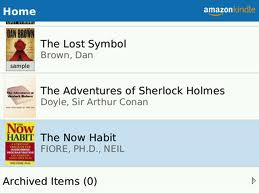
Eventually I surfed on over to Amazon to put a couple of recently recommended book titles on my wish list. As I searched, I noticed a sidebar that offered a free Kindle app for handheld devices. Sure enough, they had one for my model of Blackberry, so I went ahead and got it. I opened the Stieg Larsson book I’ve been reading off and on, and I have to say it was much easier to read than I thought it would be – visually, I mean. The print size was fine, and the clicking was okay, too.

I looked back up at my computer screen and it was then that I made the Big Discovery. There, on the left-hand side of the Kindle page was a link to a Listmania post of the 35 best free Kindle books. These days, the word “free” is looking even better than usual, so I clicked.

I can recall looking into the free book downloads when I first received the device, a generous birthday gift from my spouse in the early days of “handheld readers,” or whatever they’re called, and being vaguely dismayed by the quality of what I found. There were a lot of authors I’d never heard of, along with a few obscure classics.

Now, as I find I’m the last to learn, many classic works of literature are considered “public domain,” and are therefore available FOR FREE on Kindle.

The feeling I had, once it sunk in that there really was NO CATCH, was that a storage unit had been bequeathed to me. I started clicking, and when I was done, here’s what I ended up with:

White Fang and Call of the Wild by Jack London

Alice’s Adventures in Wonderland by Lewis Carroll

Anna Karenina and War and Peace by Leo Tolstoy

Crime and Punishment by Fyodor Dostoyevsky

Dracula by Bram Stoker

The Holy Bible, English Standard Version

The Iliad and The Odyssey by Homer

Moby Dick by Herman Melville

The Notebooks of Leonardo Da Vinci

The Tale of Mrs. Tiggy-Winkle by Beatrix Potter

The Velveteen Rabbit by Margery Williams Bianco

The Wonderful Wizard of Oz by L. Frank Baum

Needless to say, I won’t read all of them in my lifetime – not even close. But how wonderful to have all these great writings literally at my fingertips!

The list I’ve downloaded reads like a syllabus from one of my lit courses at Syracuse. I always picked up that handout on the first day with such a mix of excitement and trepidation. What is this professor going to expect of me this semester? More importantly, what kinds of journeys will I take as I read these new books?

Saturday, April 9, 2011

Being "In The Moment" in a World of "Checking In"


There's a term they use in acting a lot. They talk about how important it is to be "in the moment." It was one of the most difficult things for me to do as an actor; kind of like Zen, I suppose, where you reach a higher state of self by being selfless. Be in the moment by forgetting you're trying to be in the moment.


Very difficult.


Today, in this age of texting and the Internet and Facebook and Twitter, “in the moment” has come to mean something else altogether. We’re never really in one place anymore. We are sitting at the bar with our friends, but we’re also “checking in” on Facebook, letting all our friends know where we are.


By the way, at this moment, my friends are at Key Bar, the Purdy Lounge, 10th St. & Avenue C, the W Hotel in Austin, Chipotle Mexican Grill, and many other places. I checked in a few hours ago, while hanging out with a friend at the Flying Saucer. As soon as I did it, I asked myself, “Why the fuck would anybody care that I’m at the Flying Saucer?”


I guess in a way this was already beginning to happen in 1992 when I taught my first classes at Satellite Academy. The thing back then was pagers. All the cool kids had one. And the more you got “beeped,” the more popular you were.


That beeper took my students, and me, out of the moment. Of course it’s nothing compared to what’s happening with smart phones now. It’s so prevalent, it has changed pedagogy. There are articles in EdWeek and elsewhere written by people grasping for classroom applications for the devices their students already have in their pockets. It’s a total “If you can’t beat ‘em, join ‘em” mentality.


Some time in the mid 1990’s, my colleague, Neil Tabot and I were discussing something his office. I noticed that he would periodically look up at his computer screen as we talked, go over to it, watch the print scroll, and then type something.


“What’s that you’re doing?” I asked.


“I’m in a chat room about sea life,” he said.


I took a closer look and saw that there were people interacting with Neil and each other about, yes, sea life. It was the first time I’d ever heard of a chat room. I remember finding it odd that I was expected by Neil to share his time with this scrolling computer screen of people typing about plankton, or whatever. Perhaps the worst part of it was the realization that he found what they were saying much more intriguing than whatever our topic was. (I think we were paired up as “critical friends,” and had been visiting each other’s classrooms. This was our time to discuss what we’d witnessed.)


Right now, as I write this, I am in the moment with you, my imagined reader, rather than sleeping in my bed, where I’m supposed to be.


And now some wonk at Facebook has invented the “check in” feature. Maybe it’s their attempt to get us to appreciate where we are in that moment, rather than clicking our way across the world wide web and back again.

Thursday, February 3, 2011

Is the Term "Teacherless Classroom" an Oxymoron? (Yes, IF We Control the Debate.)

In the current issue of Fast Company magazine, there is an article called "Teacher-Replacing Tech: Friend or Foe?" by Gregory Ferenstein. The author explores the research of Sugata Mitra, whose ted.com video you may have seen, in which he leaves a computer kiosk in an impoverished town in India and observes how children use the computer to teach themselves. If you haven't seen it, you should; it's pretty fascinating, and he's a gifted speaker. (Click here if you're interested.)

There are certain teachers -- some of them among my Facebook friends -- who are having violent responses to the ideas put forth by Mitra and Ferenstein. Were I still in the classroom, I might have the same reaction. How dare some egghead anthropologist or business journalist posit their theories on what I do on a day-to-day basis? Before we get defensive, however, I think the teaching profession has to look at this new debate as an opportunity, and that we need to "get out in front of it," as they say on Madison Avenue.

Basically what I'm saying is that those of us who still believe in public education as the democratic right of all Americans need to control this discussion. We need to embrace a line that Ferenstein glosses over very quickly in the article, when he says that "[new technologies] might mean a redefinition of 'teacher' as research assistant or intellectual coach, since subject-matter lecturers are no match for access to the entirety of human knowledge."

To those of us who have been trying to do things in a less traditional way, these are not new ideas. A good teacher is a research assistant and intellectual coach to their students. In fact, if I ever run a school, and I find out my teachers are not doing that, there will be a problem, and a big one at that.

We run into trouble when we start making assumptions about what students want based on who we were as students. Yes, I had teachers who were good lecturers, sure. And yes, there are some kids today who still dig a really good lecture. Listen, I just referenced ted.com, which is a series of lectures, really, isn't it?

"Yet the student-driven classrooms do have serious flaws," Ferenstein concedes. "In the condition without any adult supervision, Mitra found that children only achieve half of what their peers in face-to-face instruction can."

If the bottom-liners who are looking for ways to make profits from the failure of our public school system are allowed to control the discussion, then what Ferenstein alludes to above will, indeed, happen, and it will create a whole new industry, predicated on the remediation of the students who have been failed by robo-teachers.

We, as teachers, can take control of this narrative, but we won't get there by being defensive or dismissive. Technology is here, whether we like it or not, and dismissing the possibility of being replaced will put us on the dole. Instead, we've got to take a good look at what we're doing in the classroom. If you're a "this is what I know" teacher, who feels the need to bestow your knowledge, versus a "this is what I learned" teacher, who wishes to coach your students to learn it too by asking good questions, then be afraid. It's very subtle, but there is a difference.

And it may mean the difference between having jobs for teachers or not, some time in the not-too-distant future.